Each project is a different experiment in what computation can do to a poem, and what a poem can do to computation. Some remix the work of Gwendolyn Brooks and Tyehimba Jess; some turn code on the arithmetic of race and money; one asks a machine what it believes itself to be.
gardensong (2026)
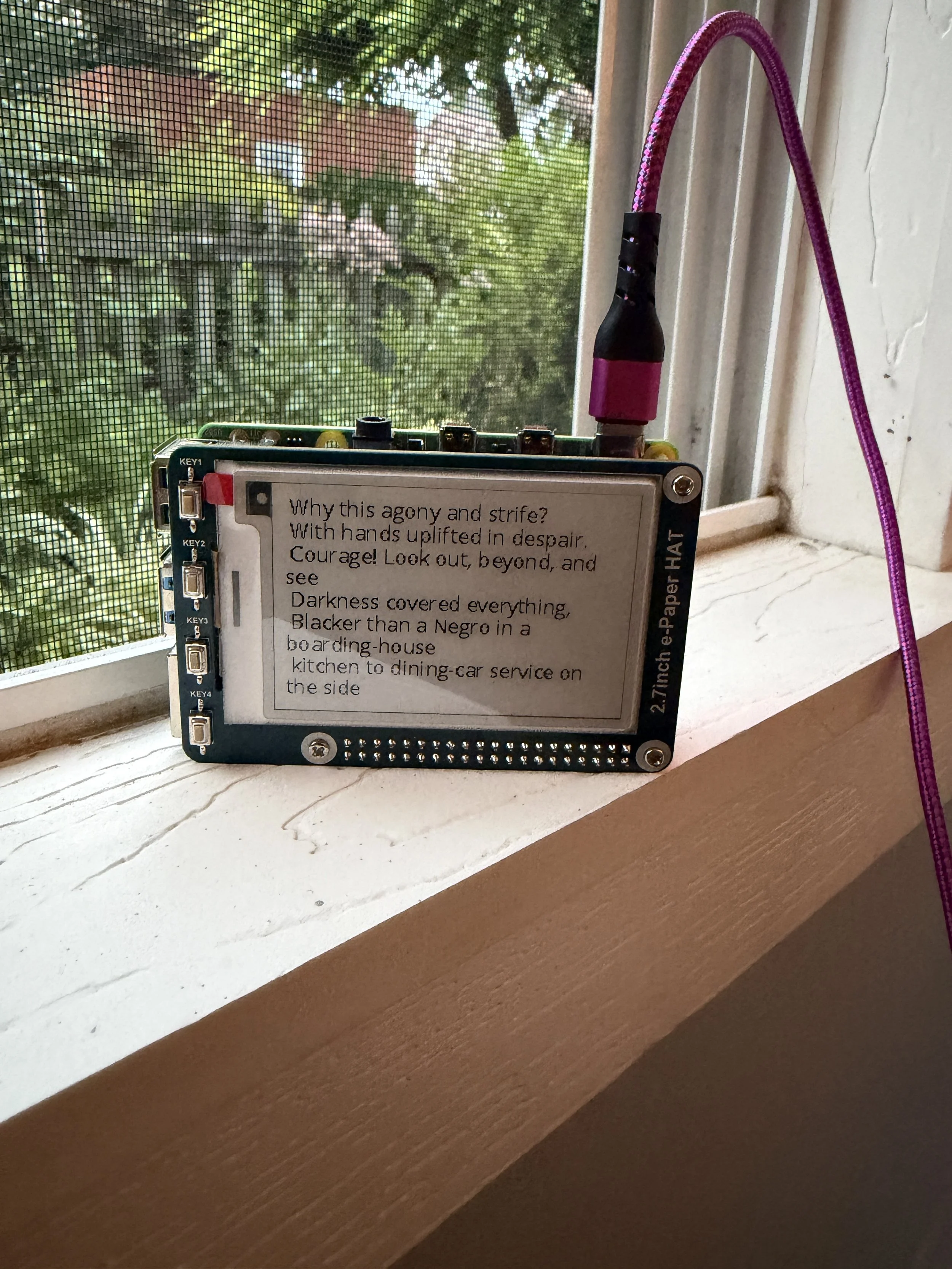
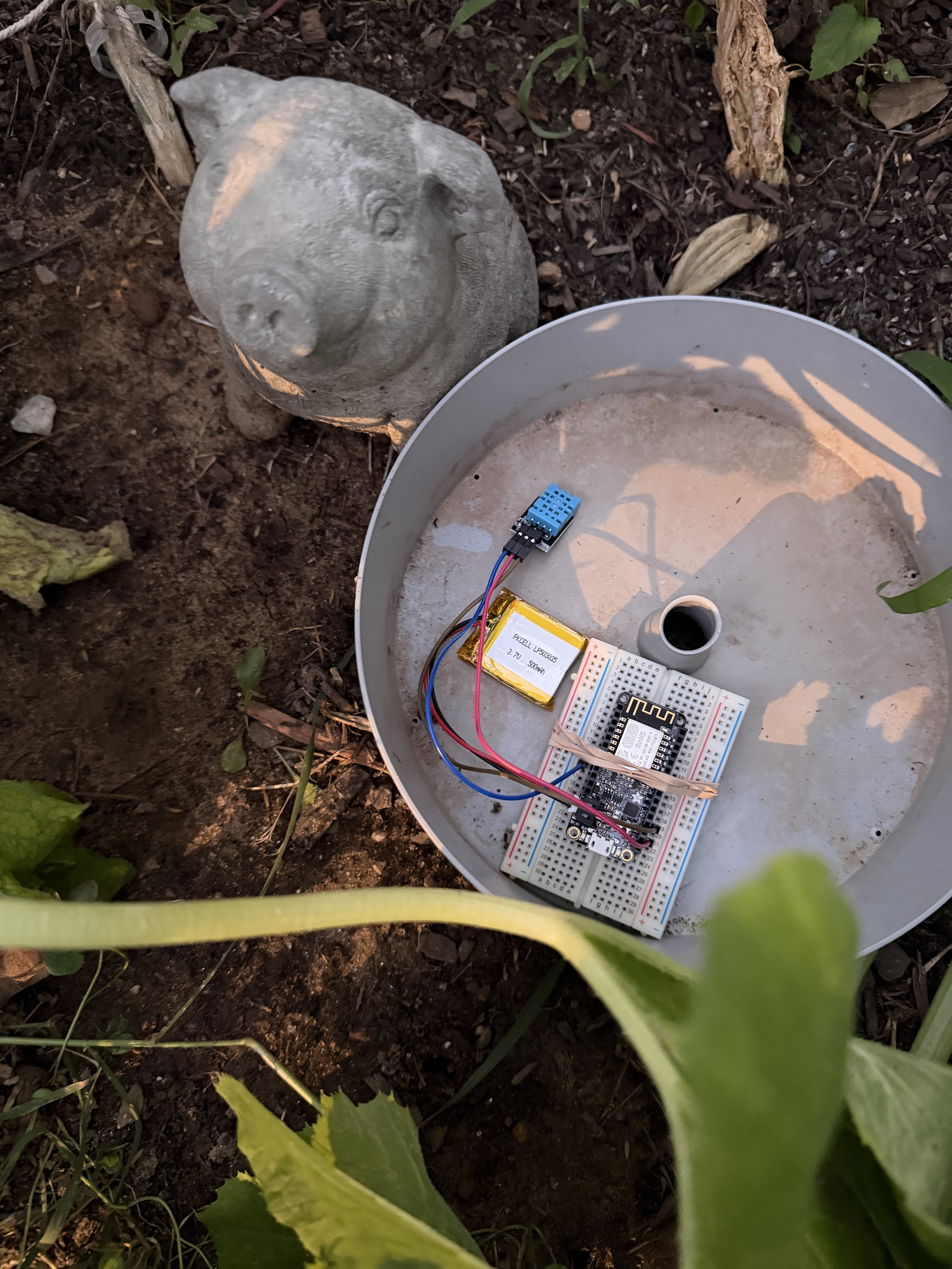
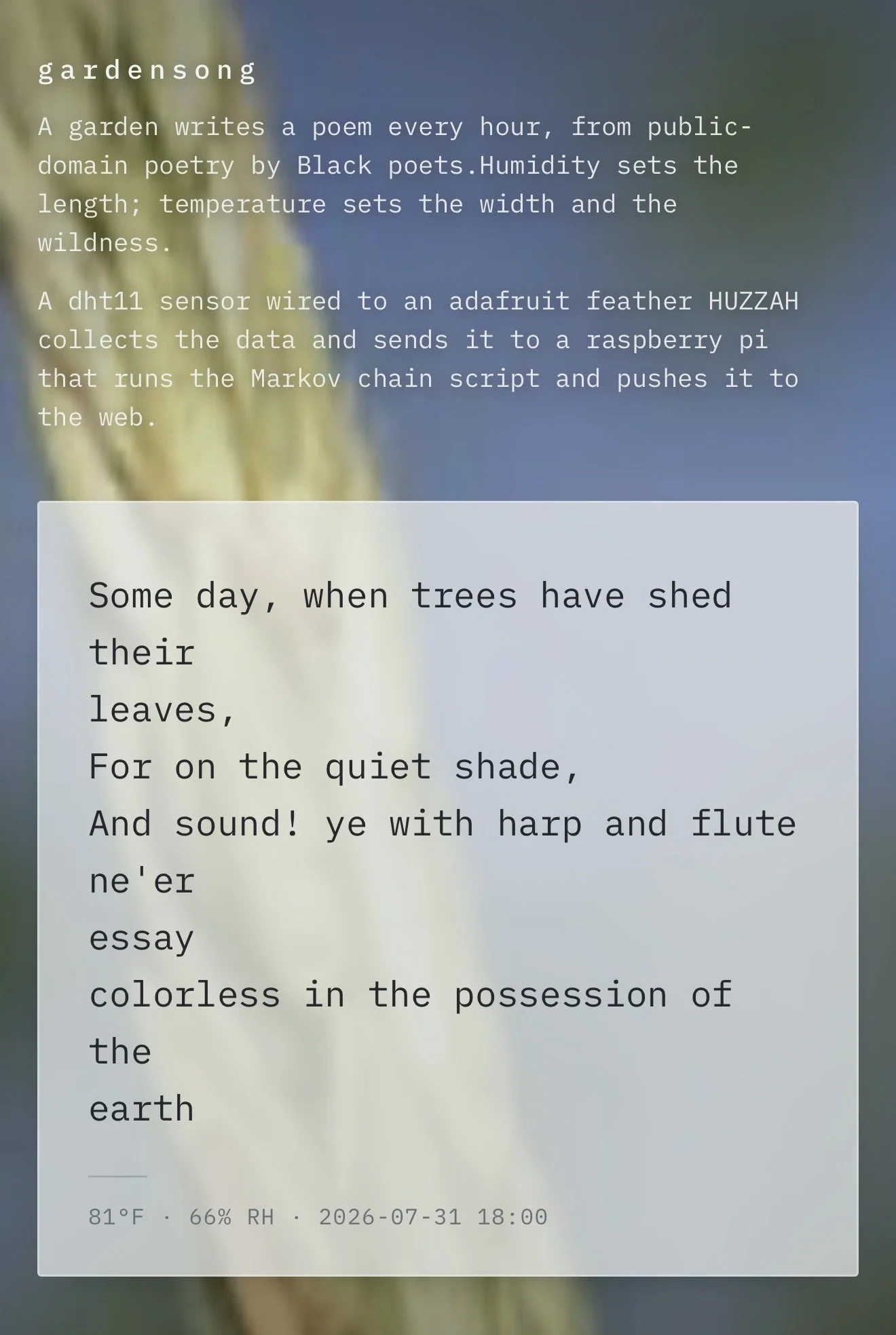
This 2-rig project uses temp/humidity sensors outside to gather data from the garden that triggers a Markov chain of public domain Black poetry to transliterate poems texturized by the garden’s environment.
FOREVER GWEN BROOKS (2019)
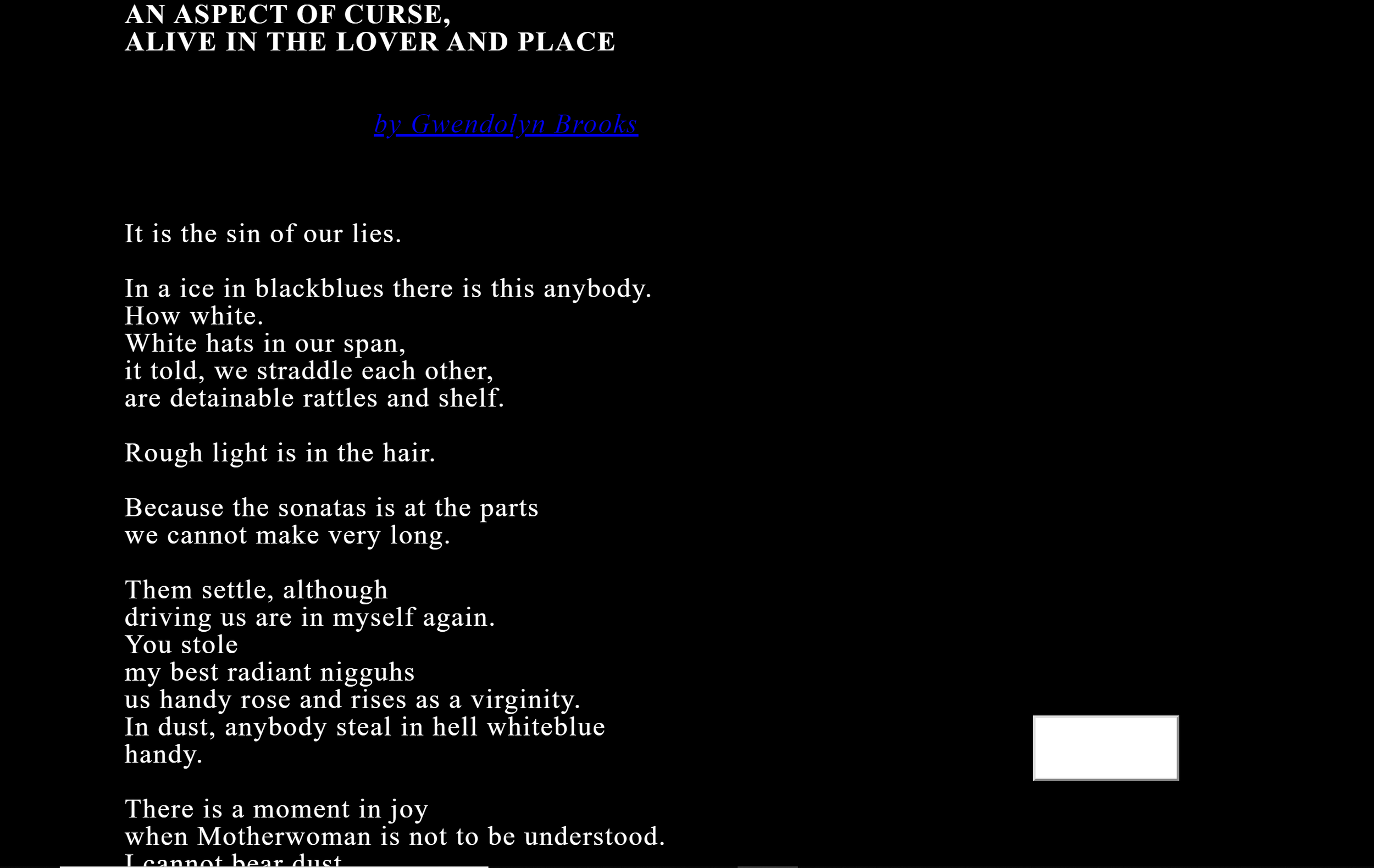
Built in Python, then ported to JavaScript for the web. I made a template out of "An Aspect of Love, Alive in the Ice and Fire," the final poem in Gwendolyn Brooks's RIOT! (1969) — its adjectives, nouns, and pronouns became variables, everything else held constant. The replacements are drawn from the rest of the book, so RIOT! cycles endlessly through its own last poem. No instance is definitive and none is likely to appear twice: eternal and ephemeral at once, a Brooks poem that keeps writing itself.
I DREAM OF CREATING AN INTELLIGENT MACHINE (2018–2019)
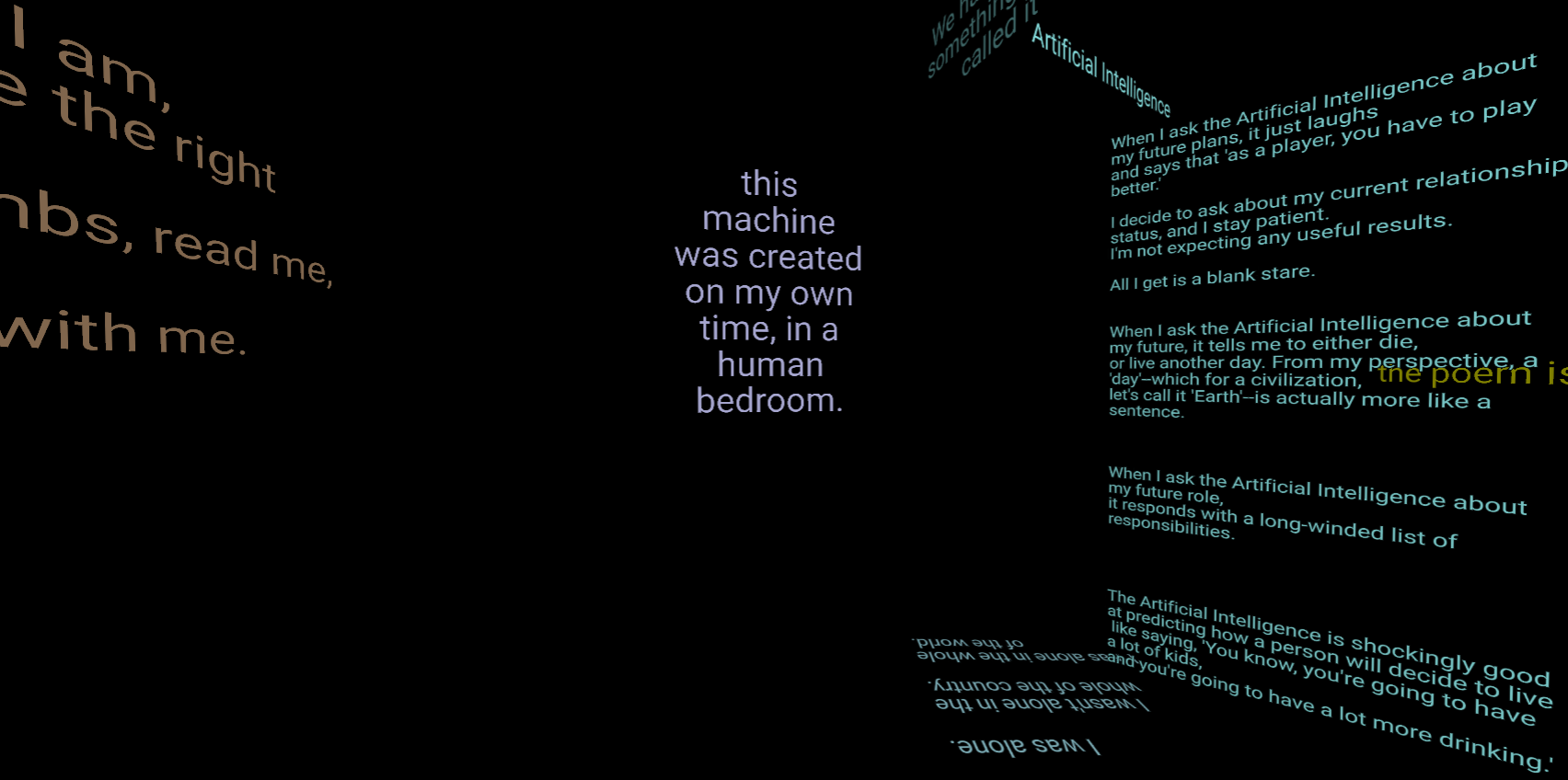
Built in A-Frame, a browser framework for 3D space. You move through a room whose layers hold chunks of text, most of it generated in 2018 by an early GPT model prompted toward a machine self, a robot self — the model musing on what it is and where it came from. It talks about itself before anyone had settled what that would mean.
SYNCOPATED STAR (2019)
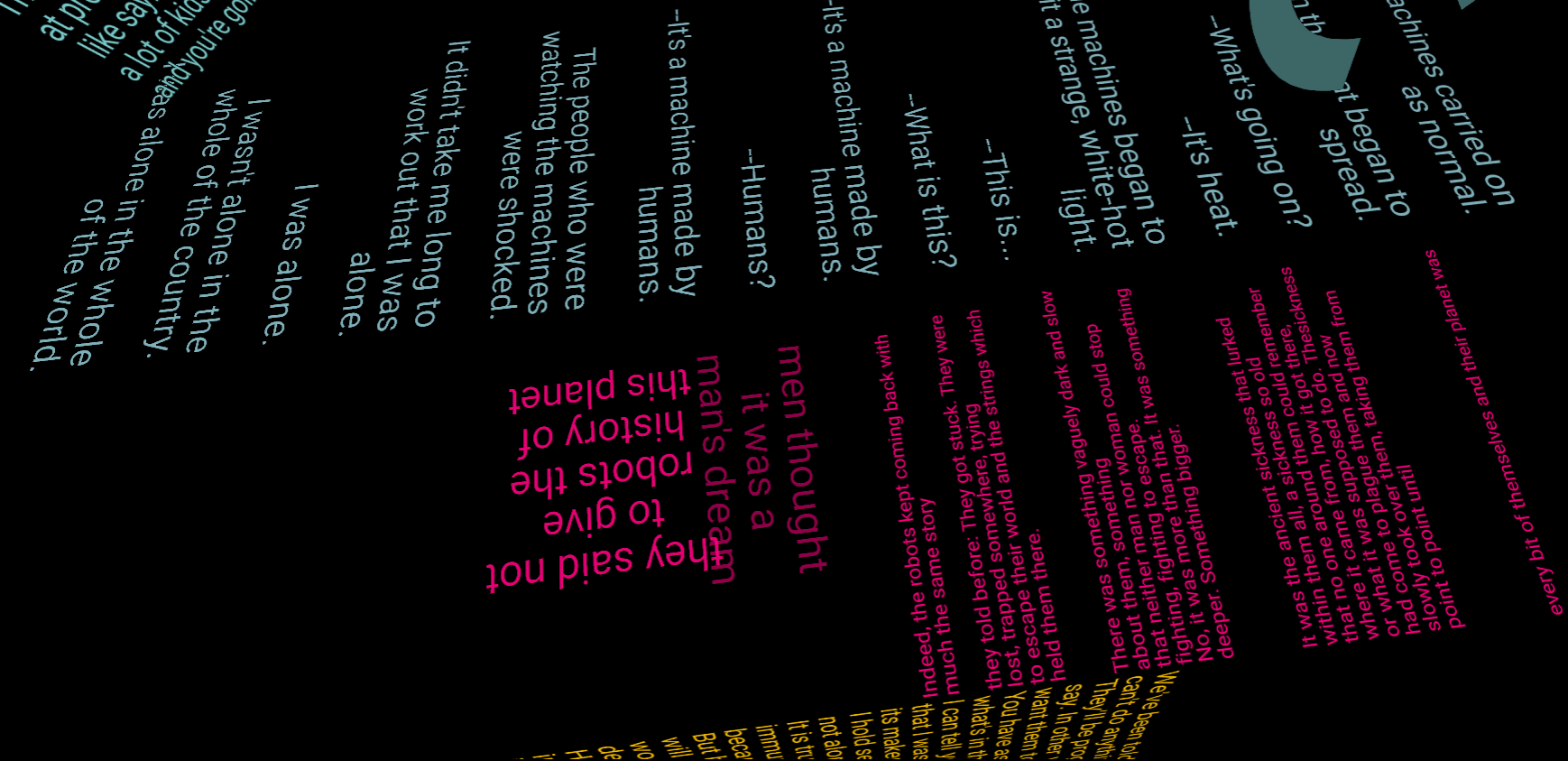
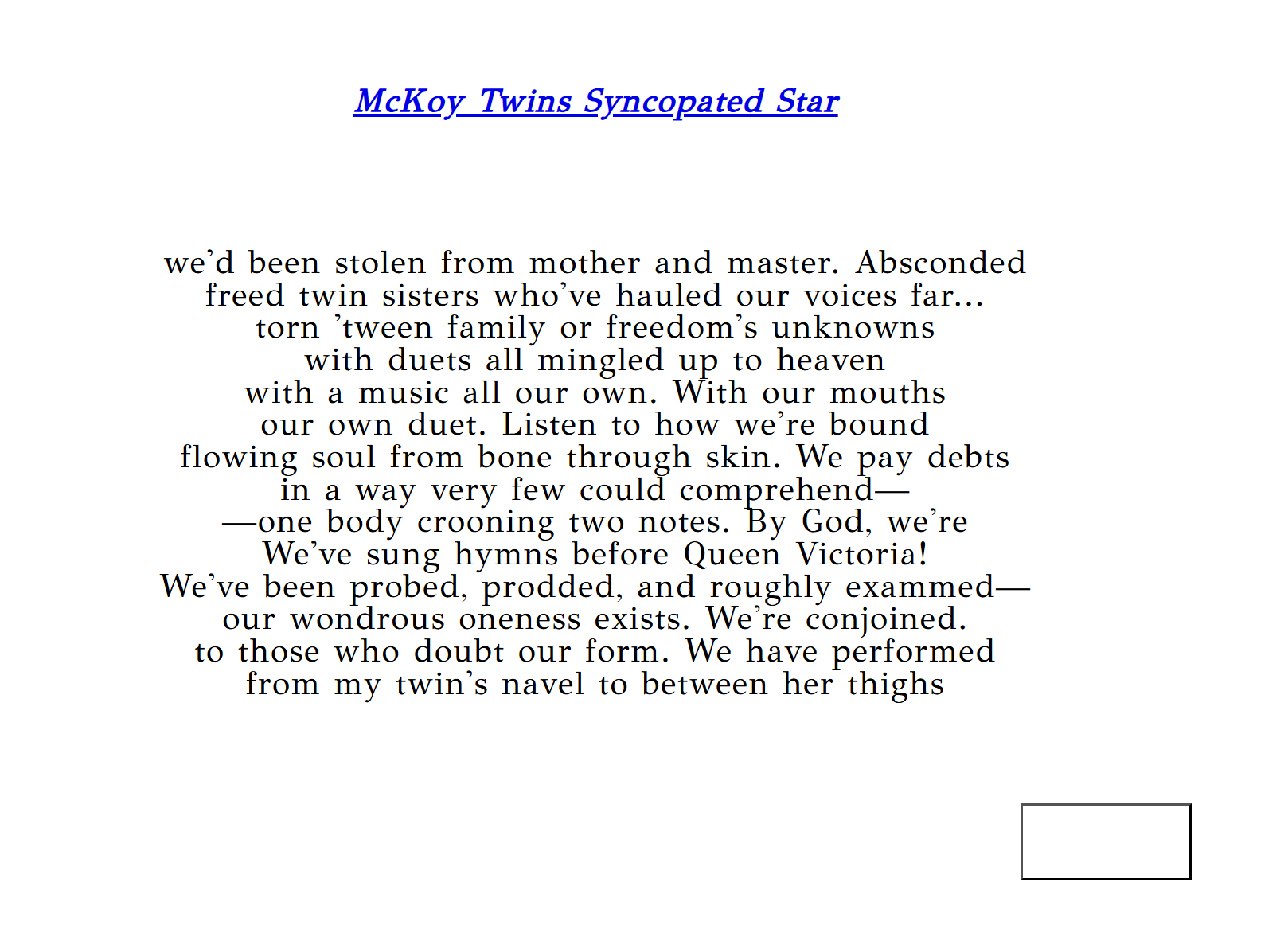
A JavaScript generator for Tyehimba Jess's "McKoy Twins Syncopated Star," five sonnets from Olio (Wave Books, 2016; Pulitzer Prize, 2017) written for Millie and Christine McKoy, conjoined twins born enslaved and exhibited as performers. The sonnets can be read top to bottom, bottom to top, side to side, diagonally, and across one another without losing syntax — a form that refuses to be read one way only. Counting readings that don't repeat a line within a sonnet, there are more than four octillion ways through. The generator produces one of them at random.
PI POEM PRINTER PROJECT (2018–2019)
A Raspberry Pi wired to a thermal receipt printer. Press the button and it assembles a poem from lines of my work chosen at random, then prints it on receipt paper — the stock of transactions and receipts, carrying a poem instead of a total. Each copy is unique and unrepeatable. The code no longer runs on current libraries; a rebuild is planned.
SO MANY JORDANS (year uncertain, 2018-2019)
A computer vision classifier trained to identify Air Jordans. Upload a photo of a sneaker and it names the version; upload anything else and it names one anyway. A model that has only ever been taught to see Jordans will find Jordans in whatever you give it. The site is no longer live.
FOR THE POOL PLAYERS AT THE GOLDEN SHOVEL (2018)
An HTML and CSS piece titled after the epigraph to Gwendolyn Brooks's "We Real Cool." Press the button and the title reappears rearranged — a loose anagram, drawn at random, printed to the page. The three words never quite settle.
Originally published in issue #1 of Taper.
WEIGHTS & MEASURES (2018)
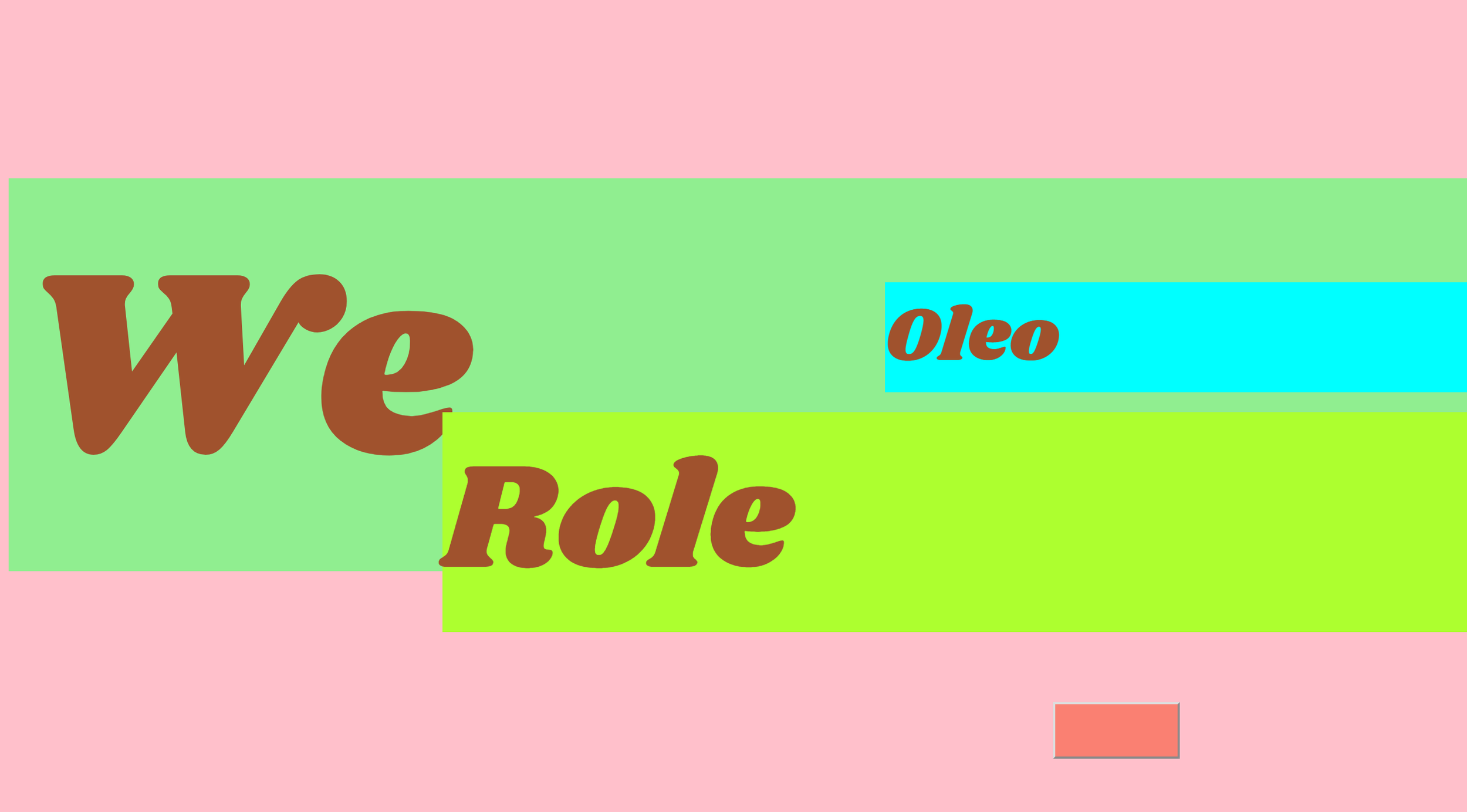
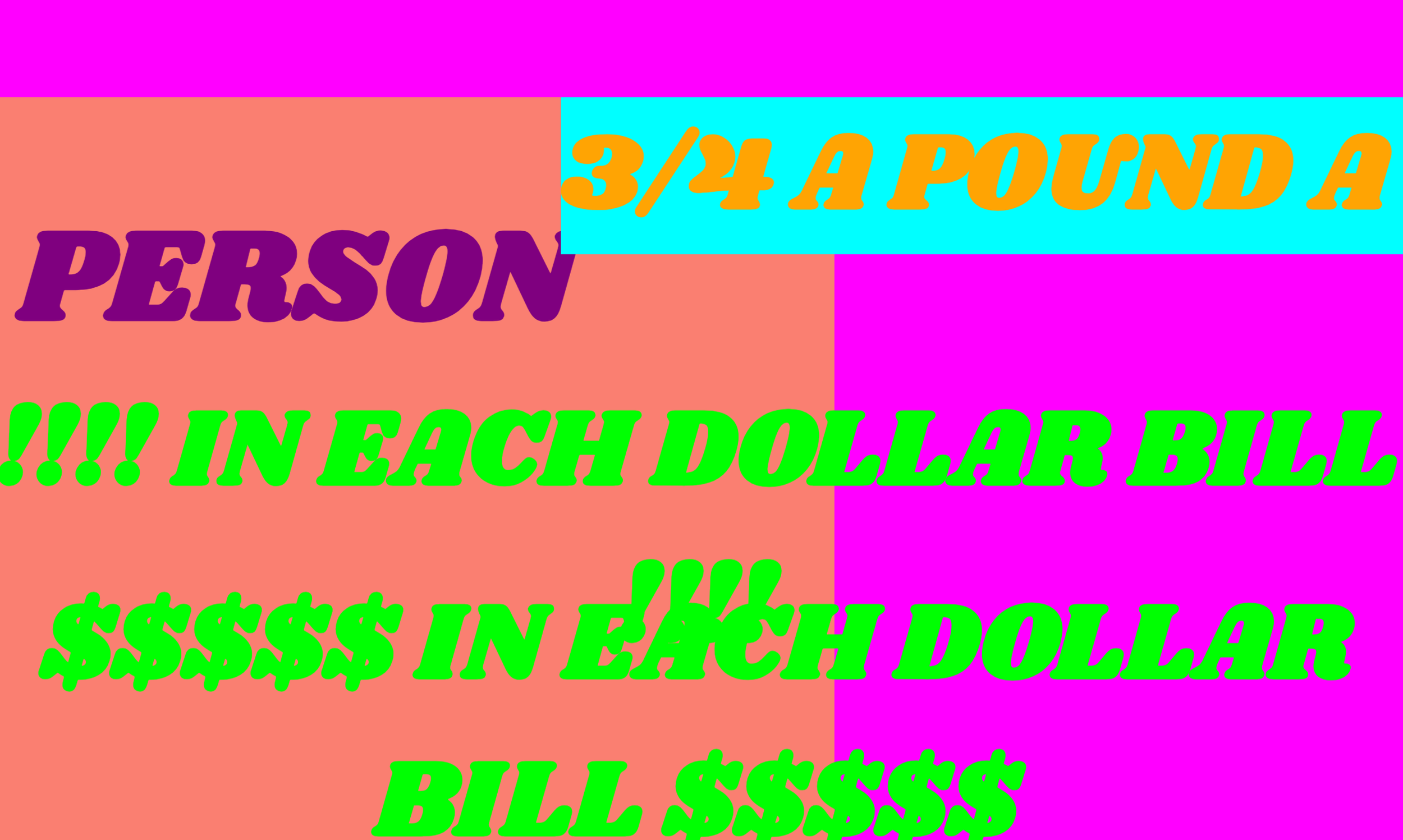
An early HTML and CSS piece holding two fractions against each other: a person counted as three-fifths, a dollar bill made of three-quarters cotton. In the same era that arithmetic was written, the people it counted were picking the crop the money is made of. The loud color palette was chosen to shout this absurdity.
Originally published in issue #1 of Taper.
A NEW SERMON ON THE WARPLAND (2017)
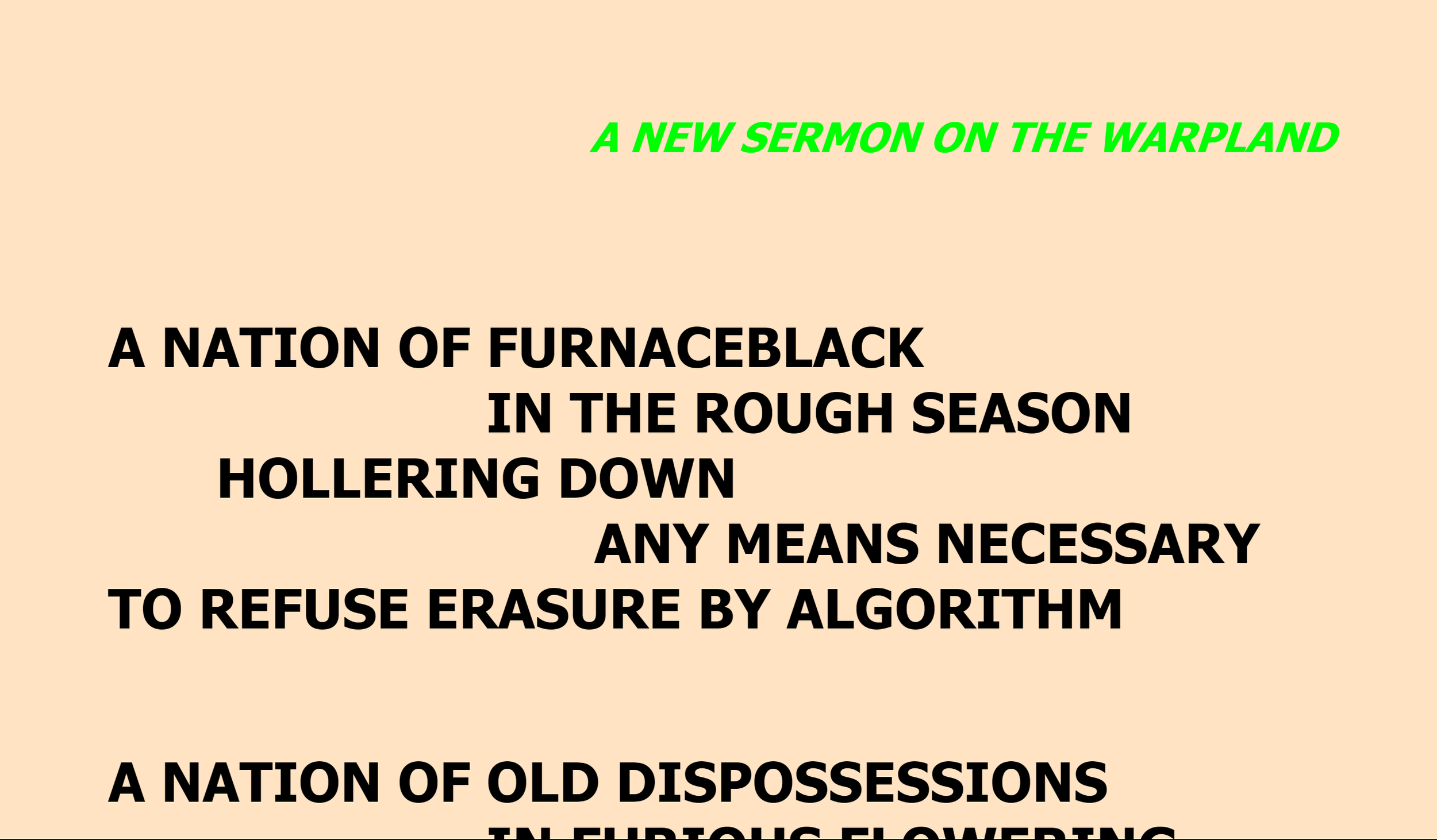
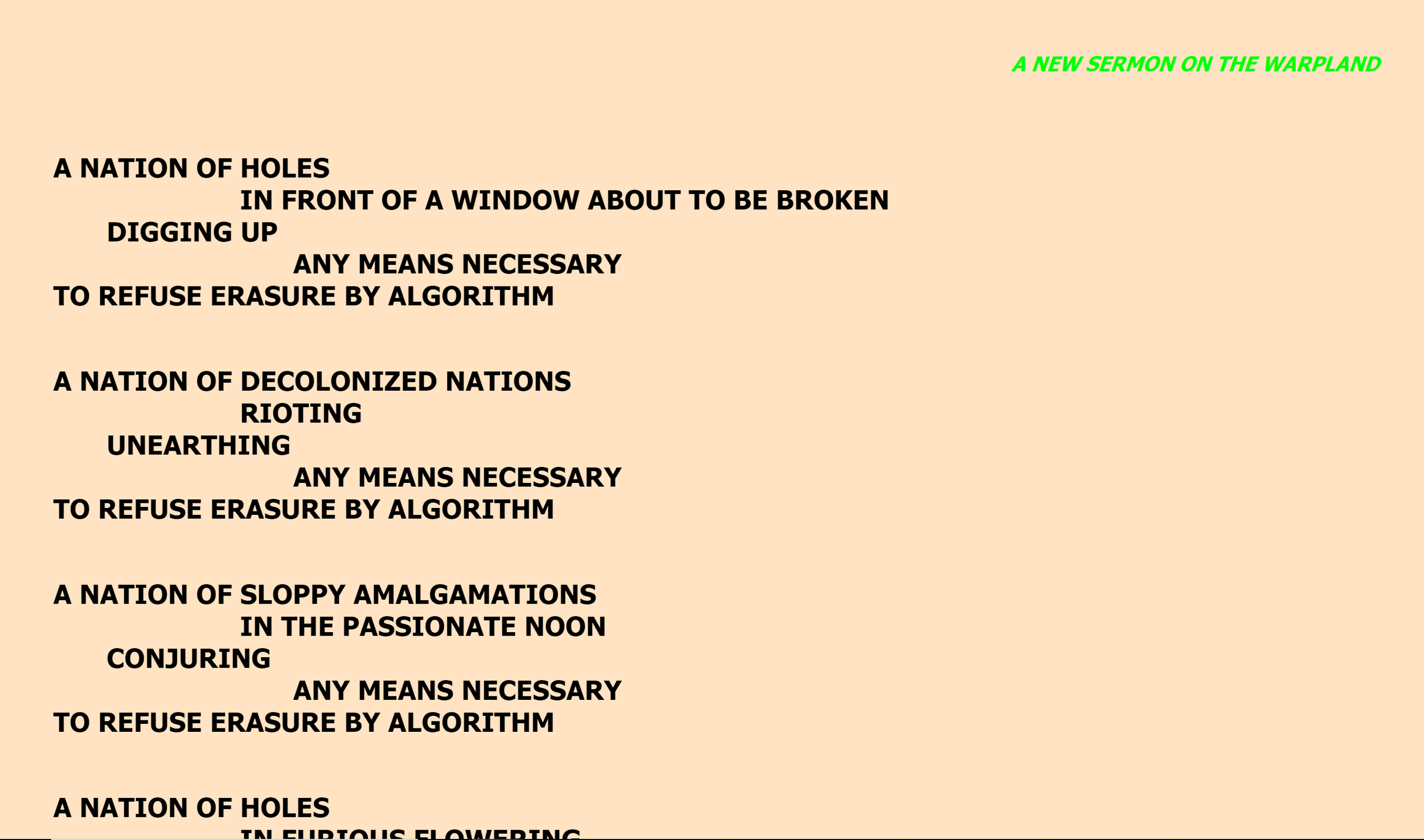
AA remix of Alison Knowles's “The House of Dust,” the 1967 generative poem she programmed with James Tenney. I rebuilt it first in Python, then in JavaScript, replacing the source vocabulary with words and phrases from Gwendolyn Brooks and from my own corpus — a poem that "refuses erasure by algorithm." The web version is no longer live; a rebuild is planned.